

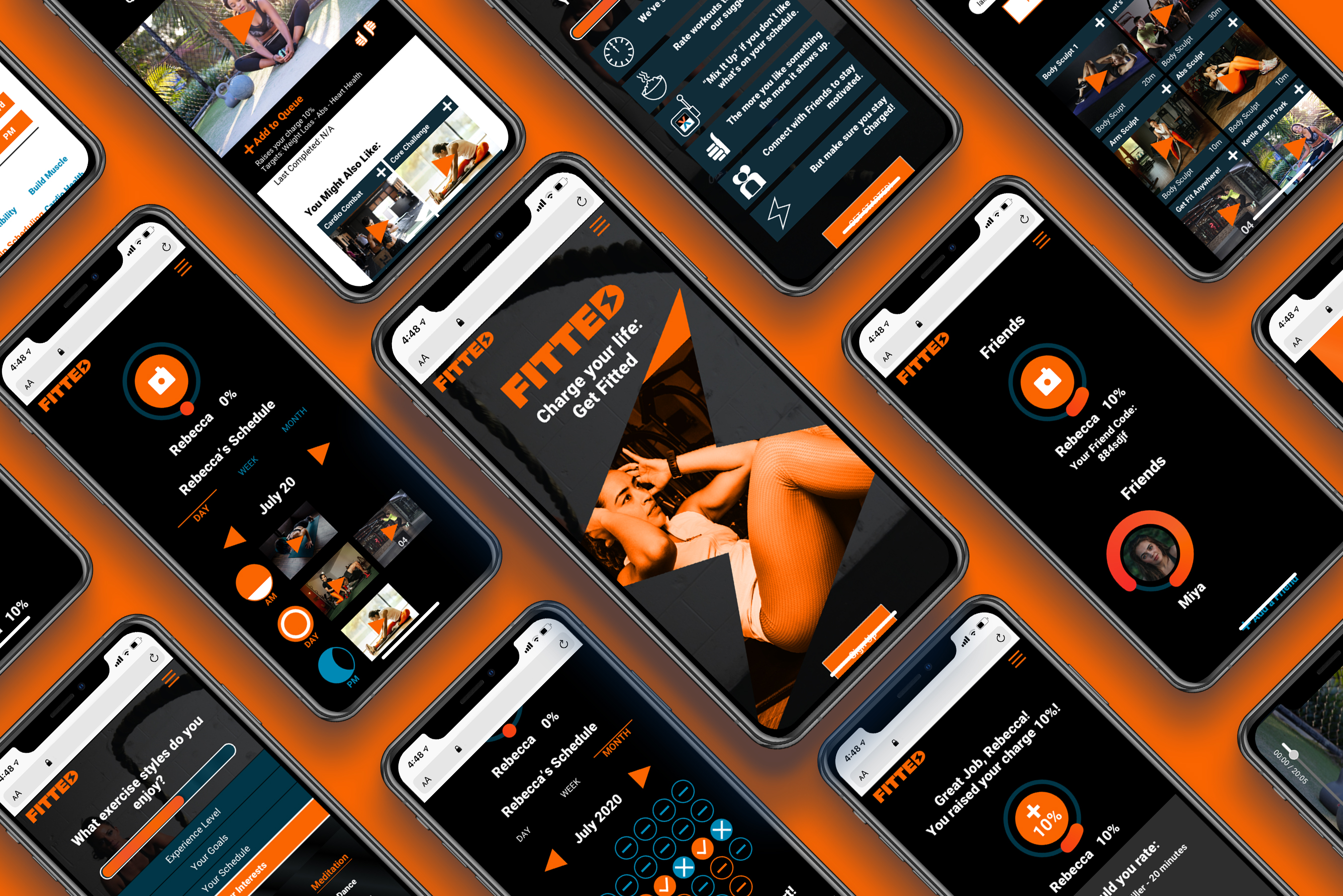
Concept Case Study · Responsive Web App · Fitness
One metric that matters: keeping beginners charged
Most fitness apps bury beginners in calories, charts and choices. Fitted does the planning for them, adapts as they go, and tracks a single, motivating number: their charge.
- Type
- Concept product, end to end
- My role
- Research, UX, UI, icons, motion
- Platform
- Responsive web app
- For
- Exercise novices with little time
01The Opportunity
The user persona was an exercise novice, and the web app is geared toward beginners with little time and no experience. It had to get them up and going as quickly as possible and, more than that, keep them motivated.
Exercise is there to help charge our life and keep us healthy and full of energy.
A lot of fitness trackers and apps give you calorie readouts and tons of metrics and charts, but for many beginners those are demotivating and don’t focus on the true purpose of exercise.
Product goals
- Make an easy-to-use, motivating fitness app that helps beginners achieve their fitness goals.
- Add a layer of gamification and the ability to connect with friends, to increase motivation and promote continued use.
- Make something that can change with the user as their goals and preferences change.
02Product Bets
Easy to use
Remove the hardest step: scheduling
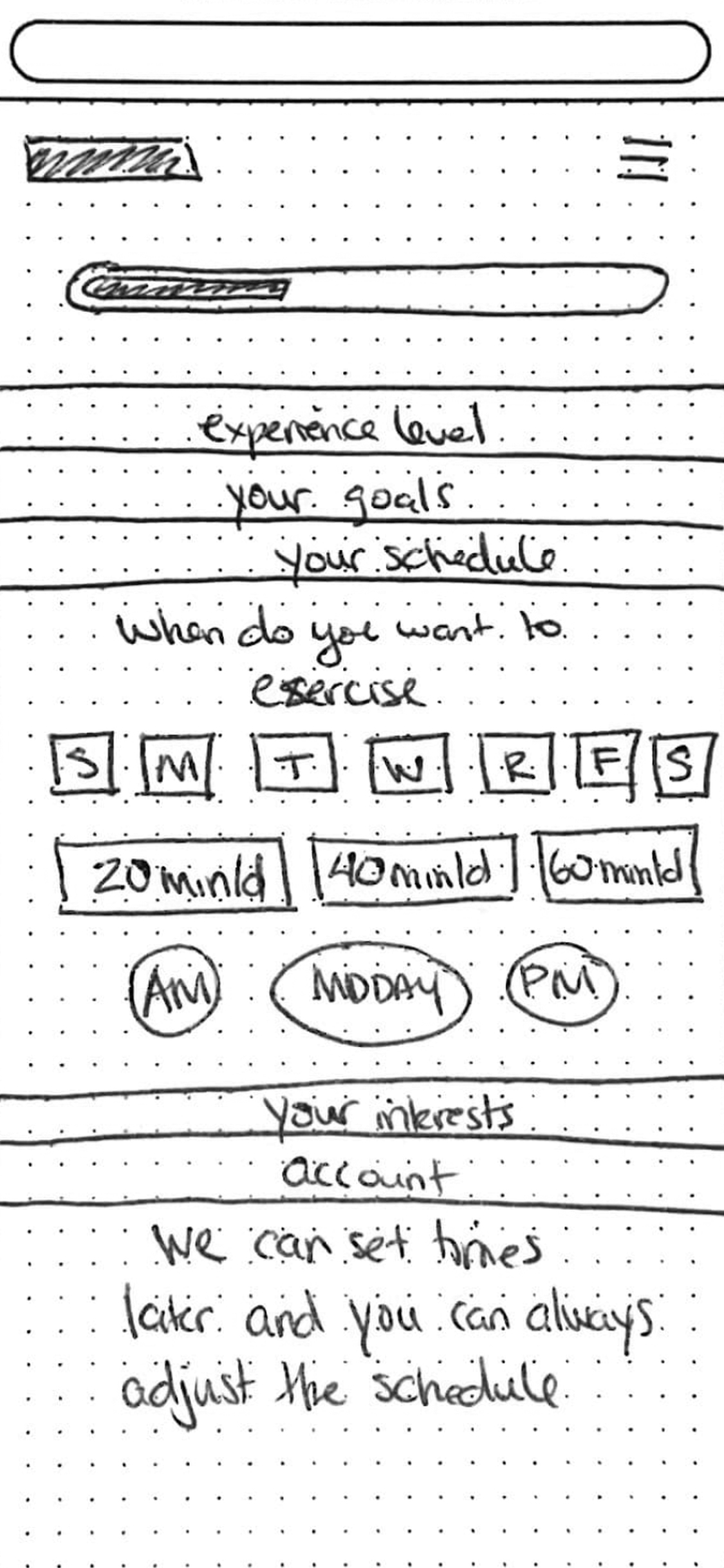
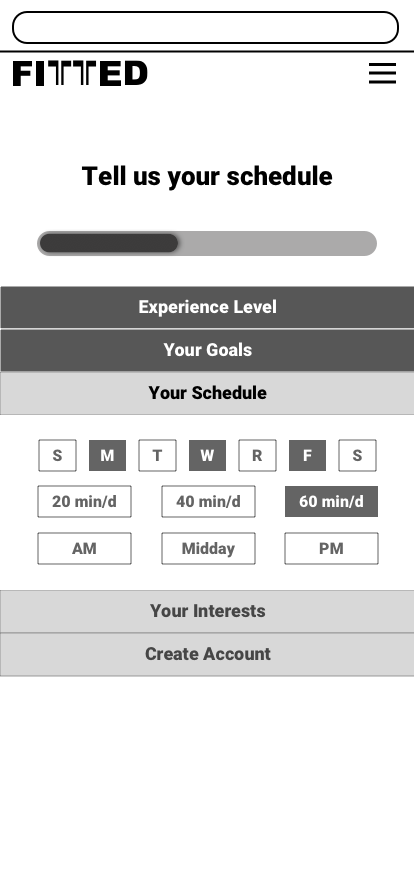
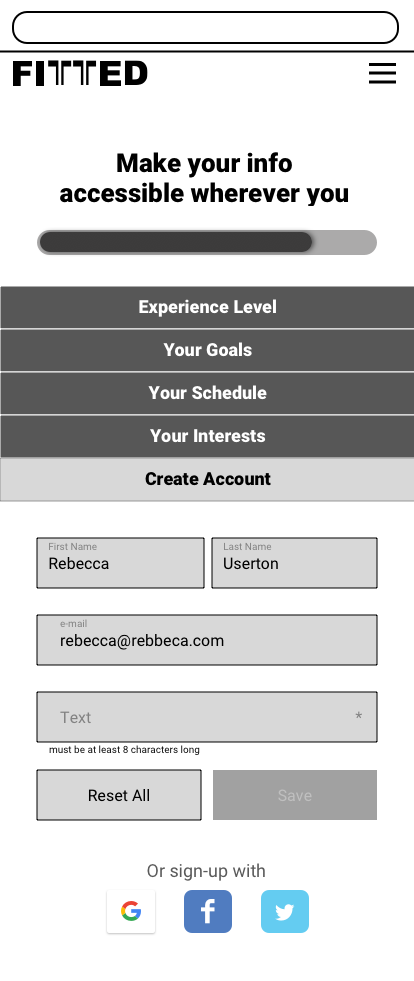
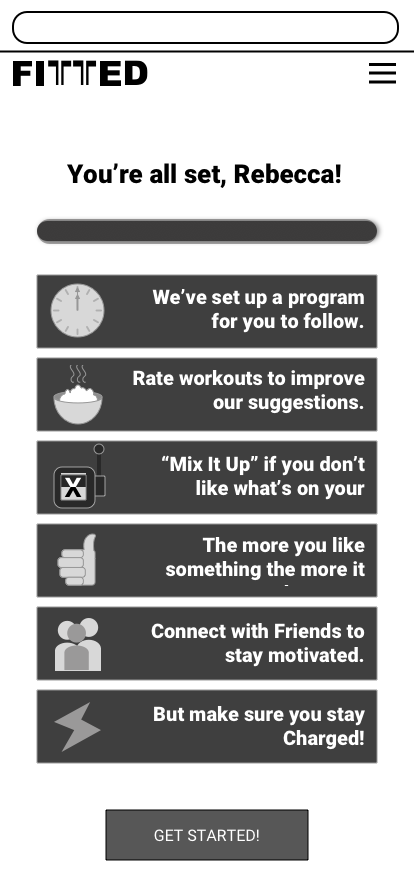
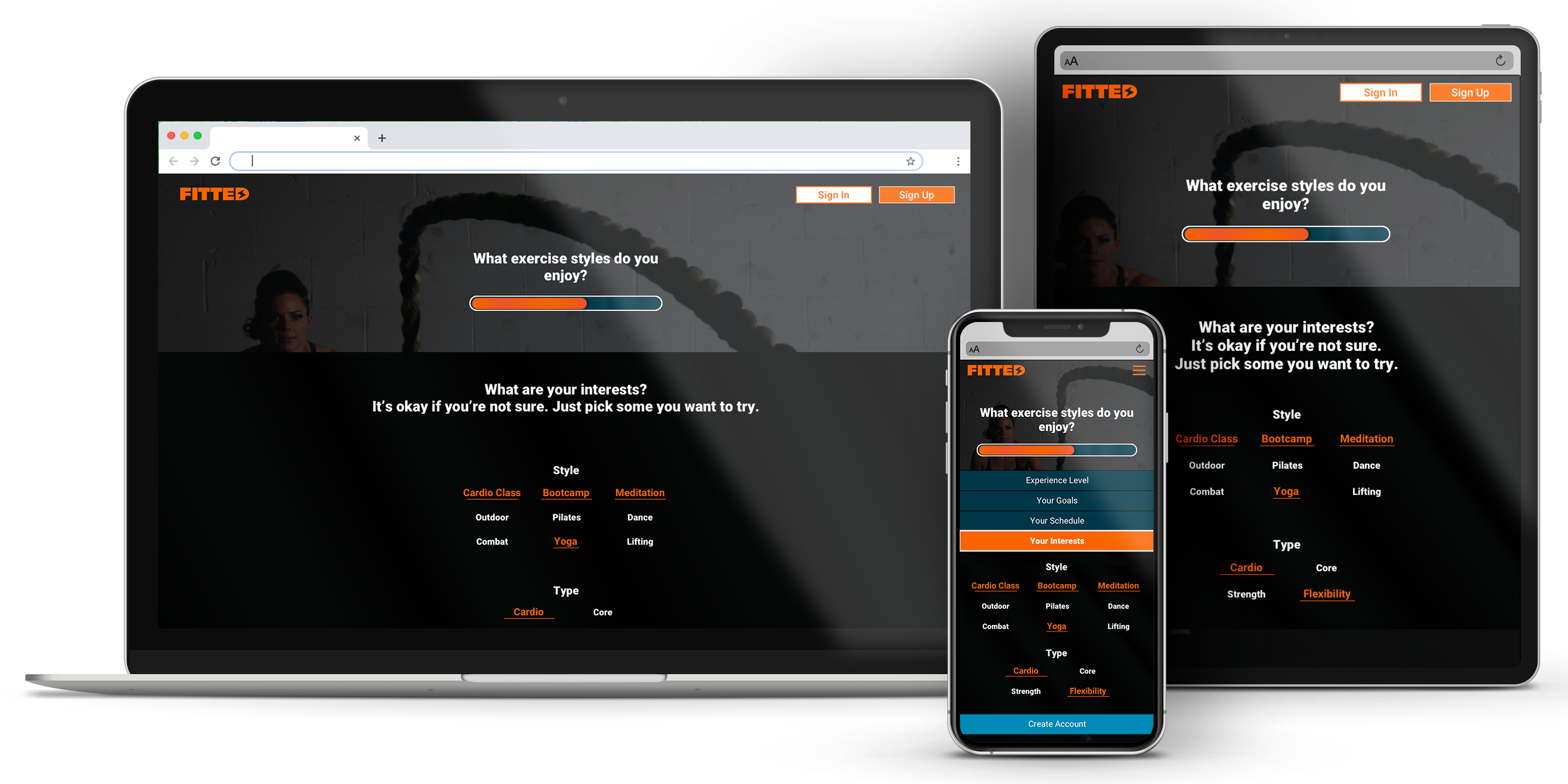
I identified that the greatest struggle for beginning users is developing a schedule, so I made it a priority for the app. An onboarding experience helps users set their goals and preferences, and the web app does the rest. Users don’t have to rely on lengthy searches to find the right workout, because the app does that for them.
Making it fun
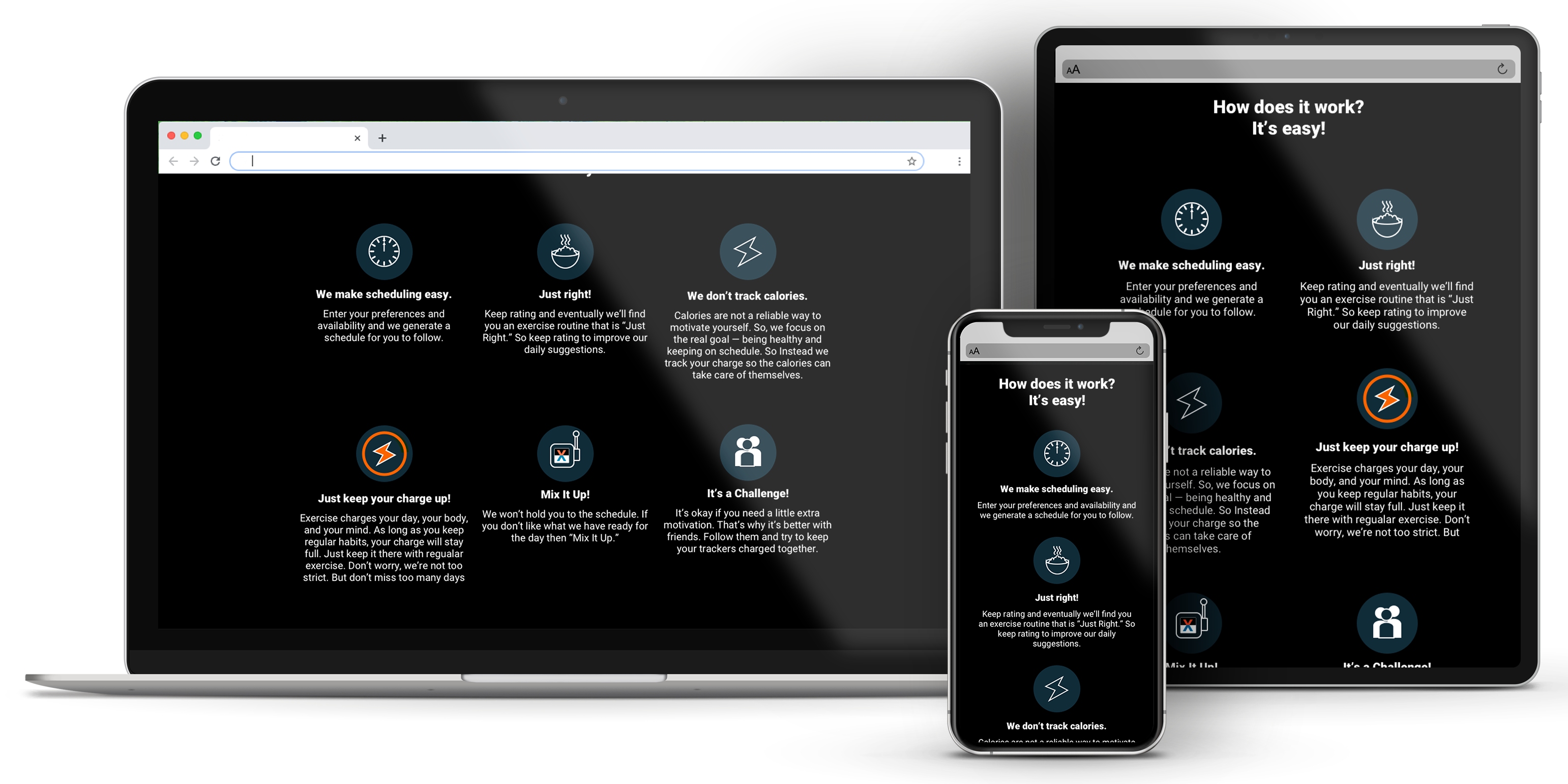
Schedules that learn, with a “Mix It Up” escape hatch
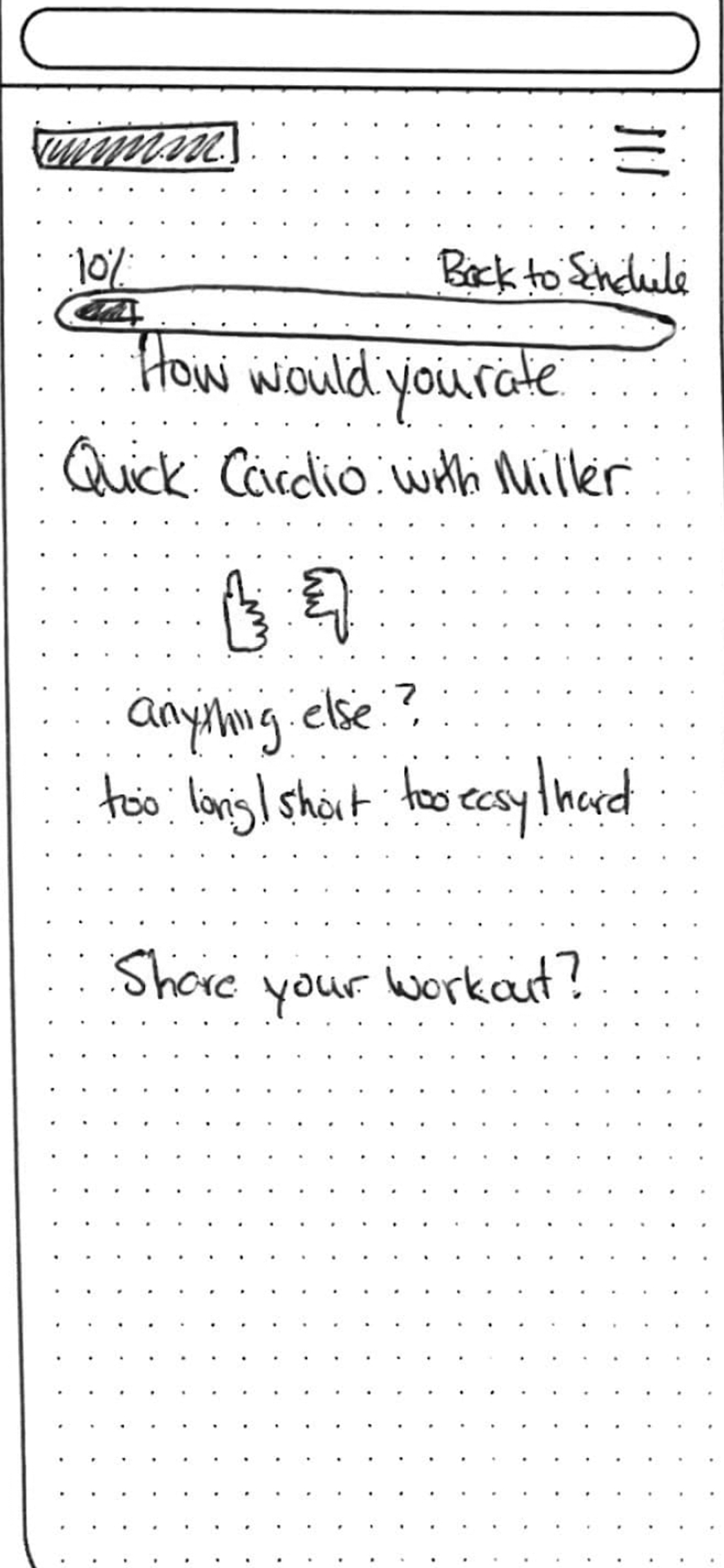
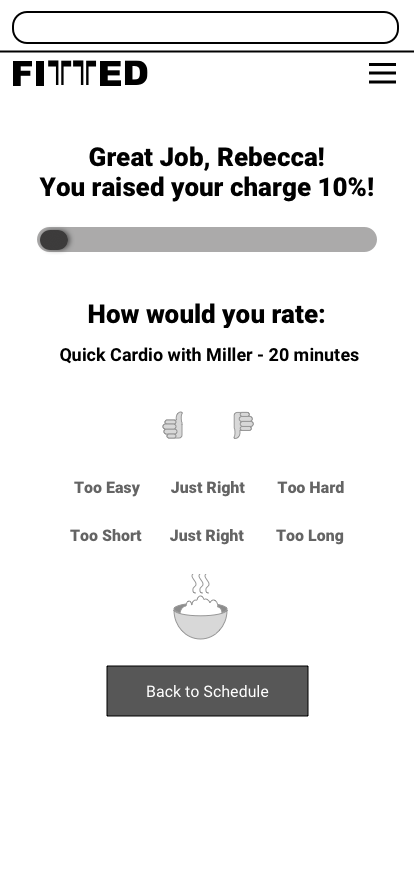
Personal, tailored schedules are automatically modified through post-workout user ratings and continued adjustments. If users don’t like anything on the schedule, they can “Mix It Up”, which adds another layer of control and fun, all without having to plan their own exercise routine.
Motivation
Track one thing: your charge
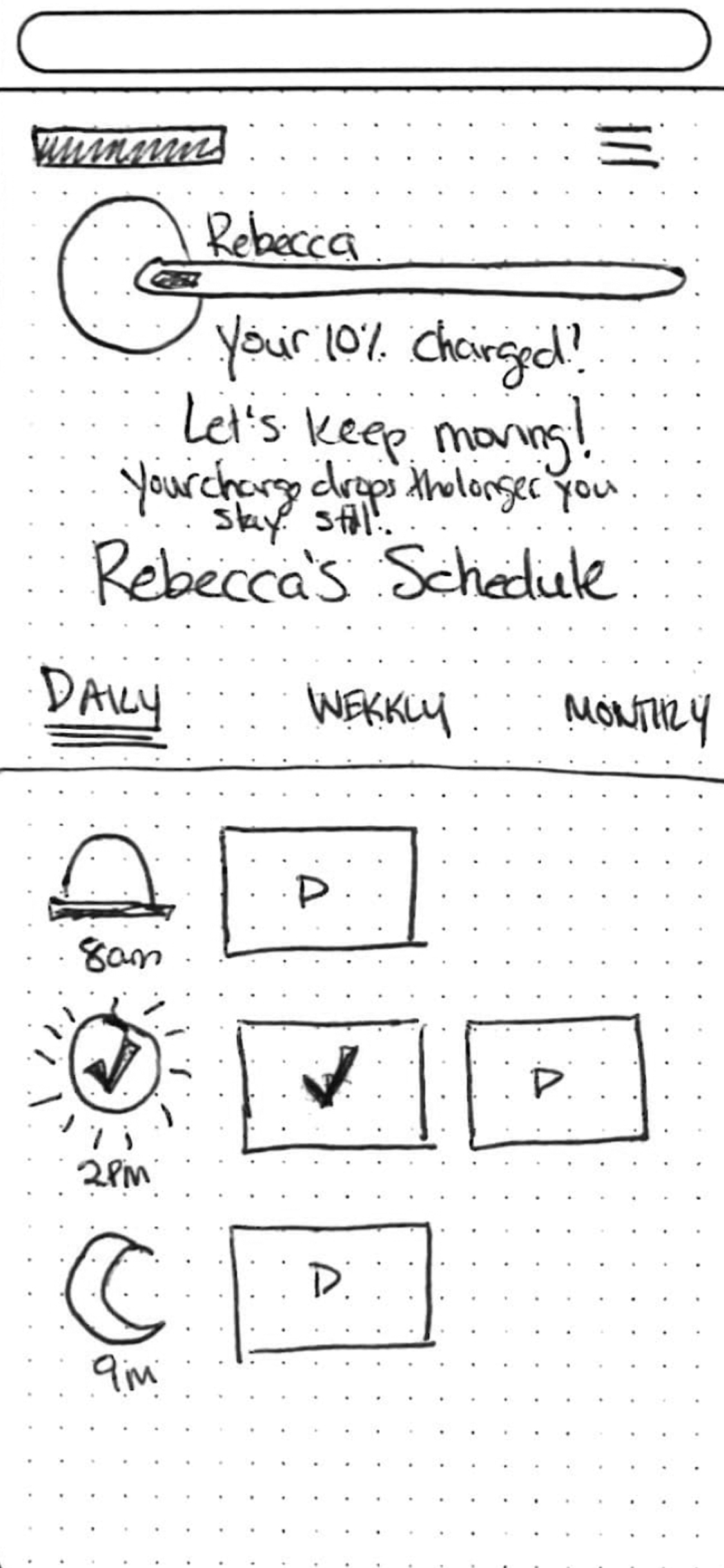
In early paper prototypes, I focused on a simple interface and experience that tracked a single metric: the user’s charge.
03Information Architecture
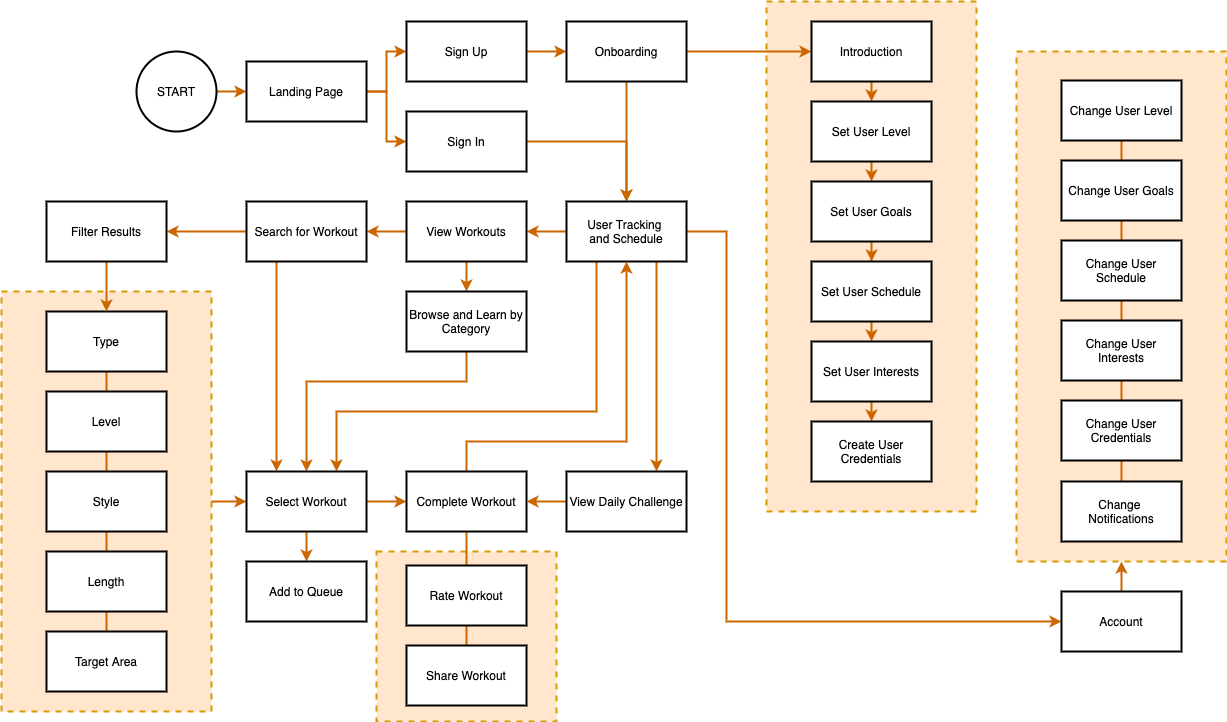
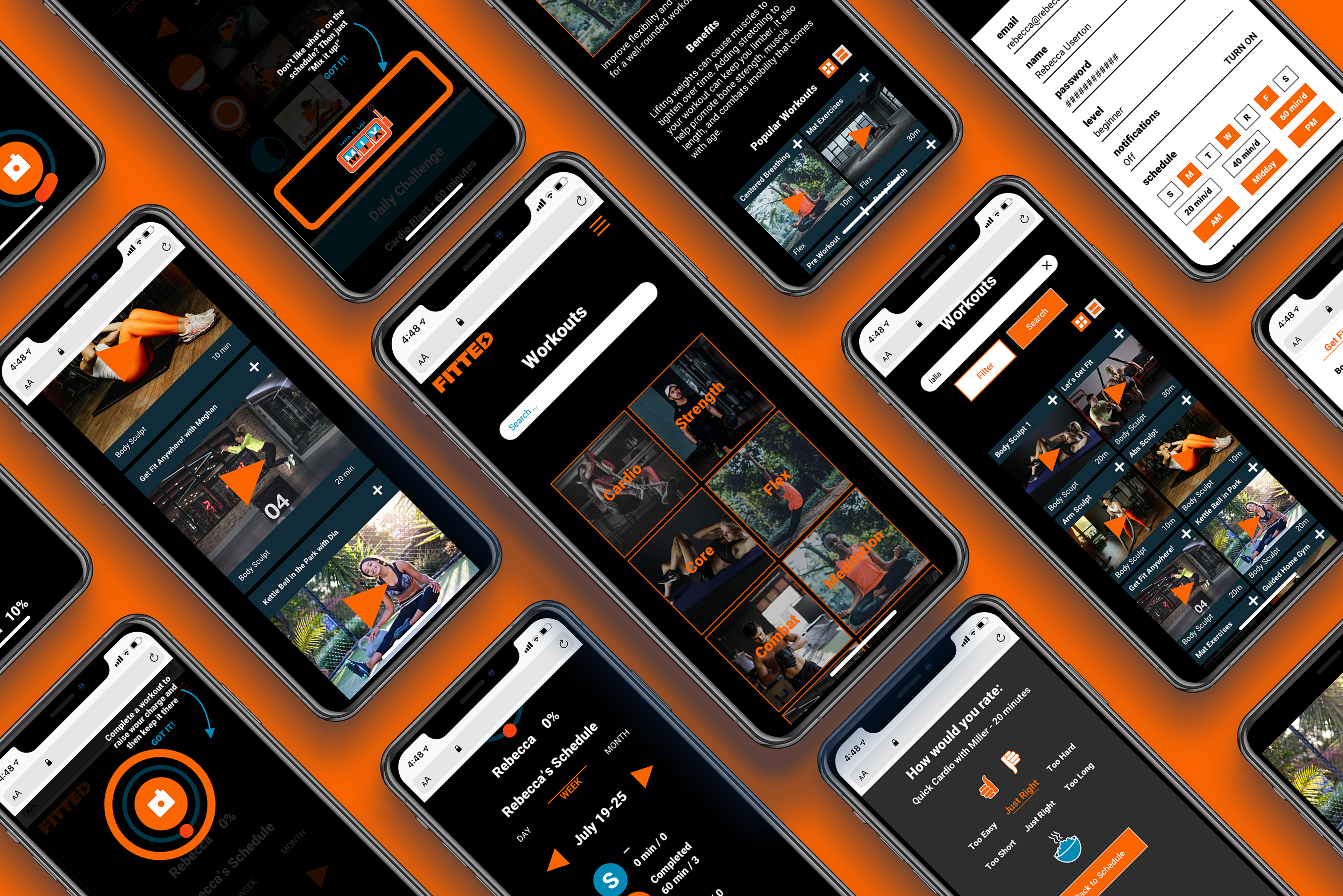
“User Tracking and Schedule” is the default page: a dashboard that tracks user status and gives an overview of app-generated schedules and daily challenges. Most of the work is done by the app, so users don’t have to go far to get started. Apart from customization and user-specified metrics, the app has a basic interface and minimal pages.
04From Paper to Pixels
Low-fidelity paper wireframes
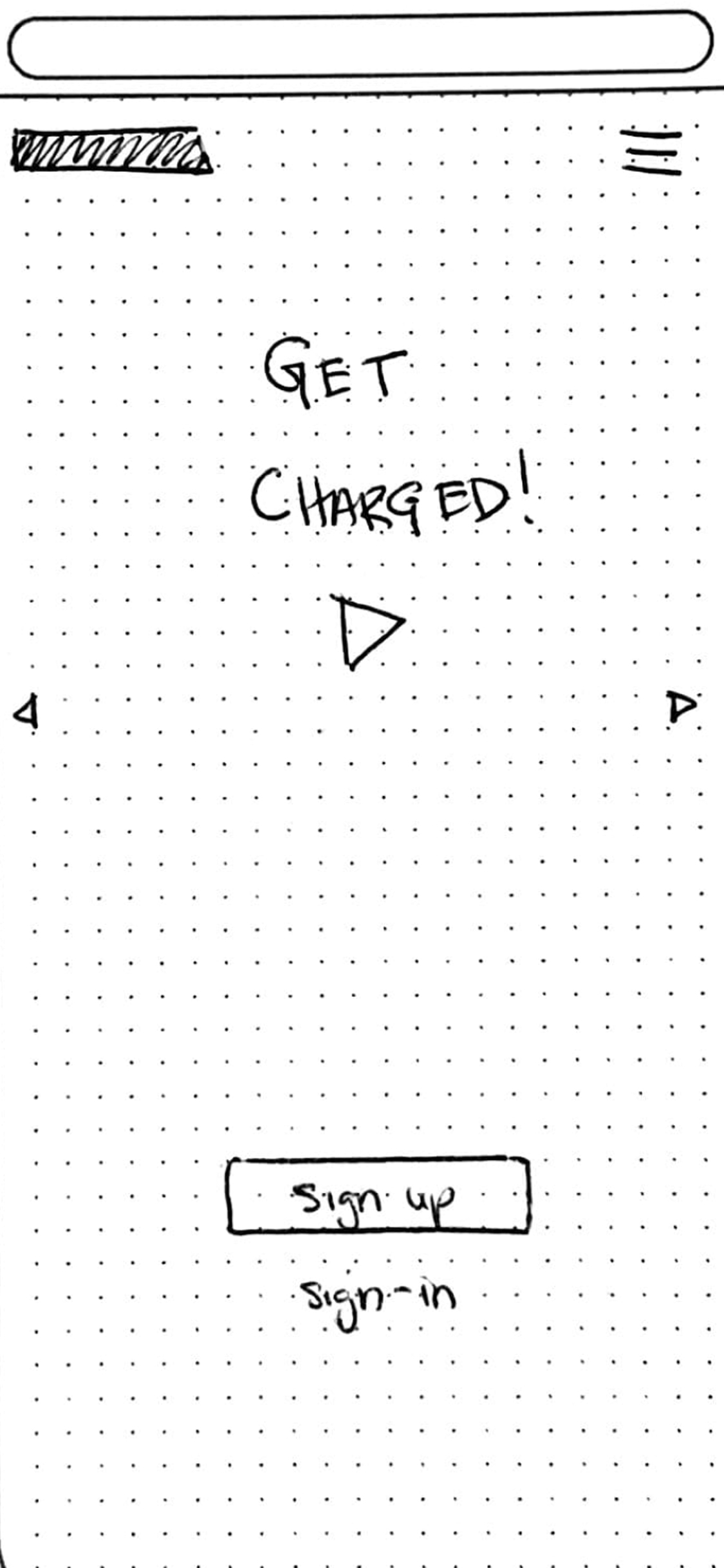
Paper prototypes kept the focus on getting beginners started fast and tracking only their charge.
Mid-fidelity sketch wireframes
05Visual Language
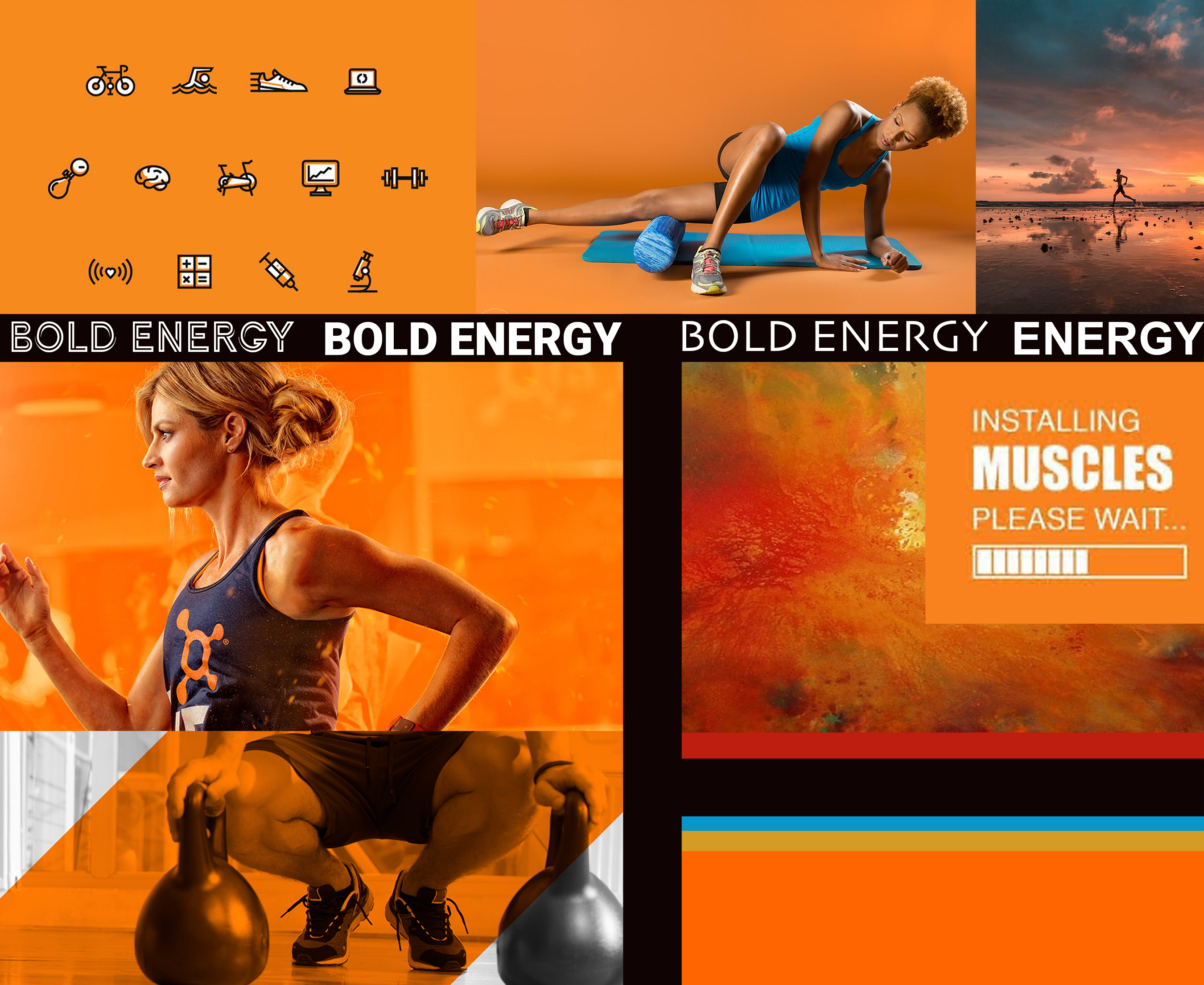
For color inspiration, I drew on the classic complementary pairing of blue and orange, which reflects the high-intensity and cool-down periods of exercise:
- Orange · call to action
- Light blue · highlight
- Dark blue · lifts items off the black and differentiates elements
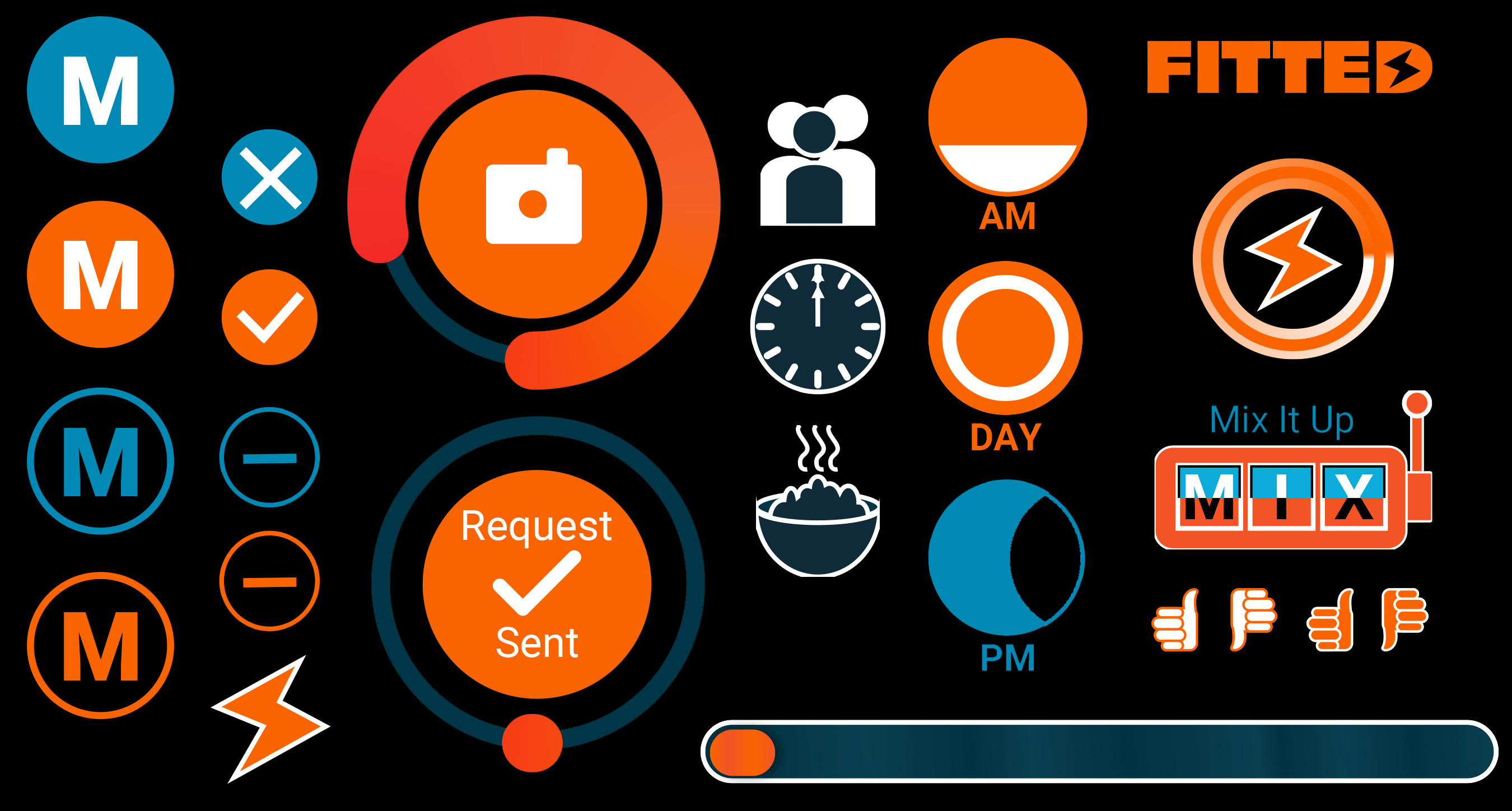
All of the icons are custom and are part of the full style guide, available on Behance.
06Responsive Web Mockups
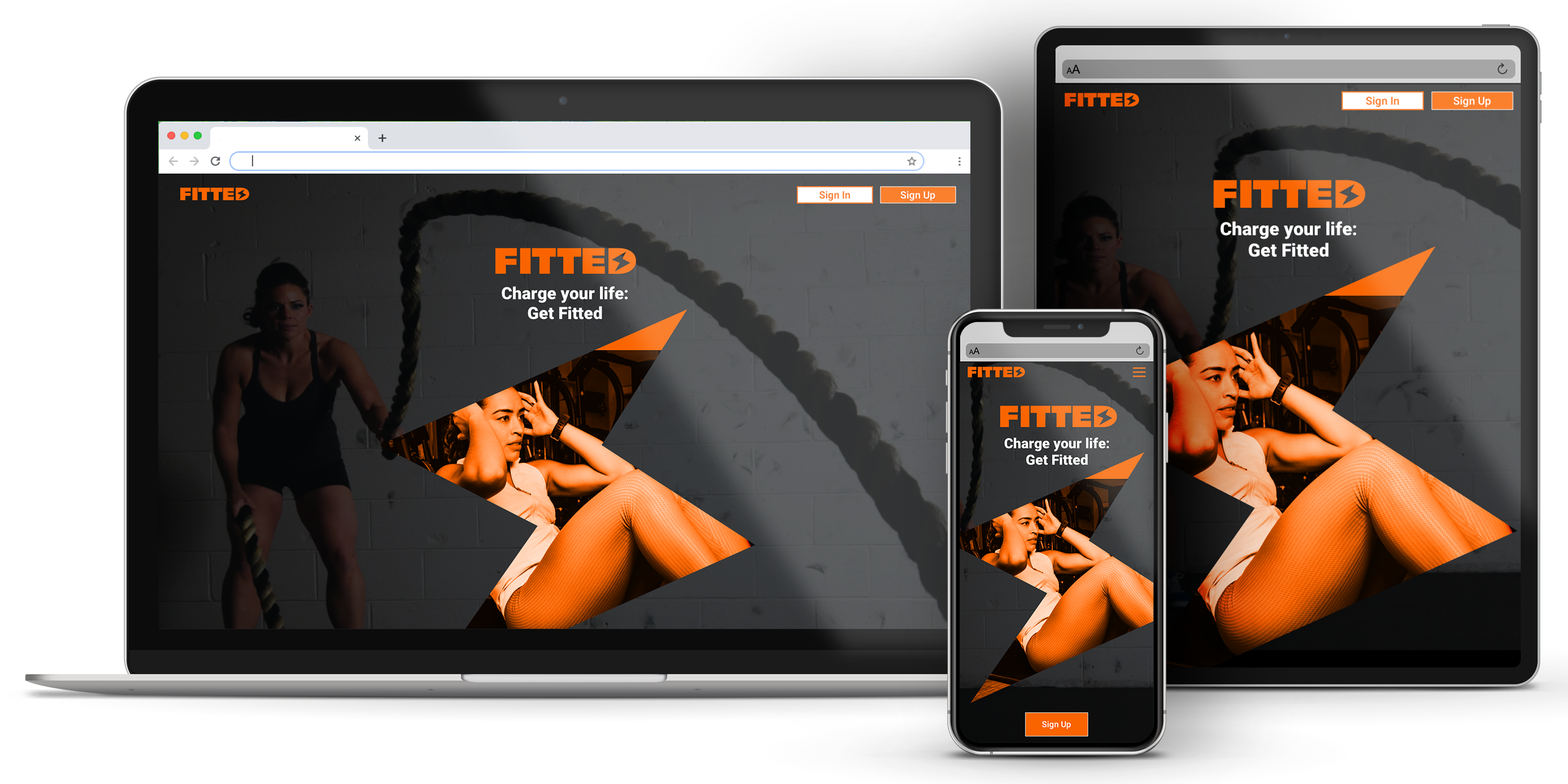
See the web app’s landing page.
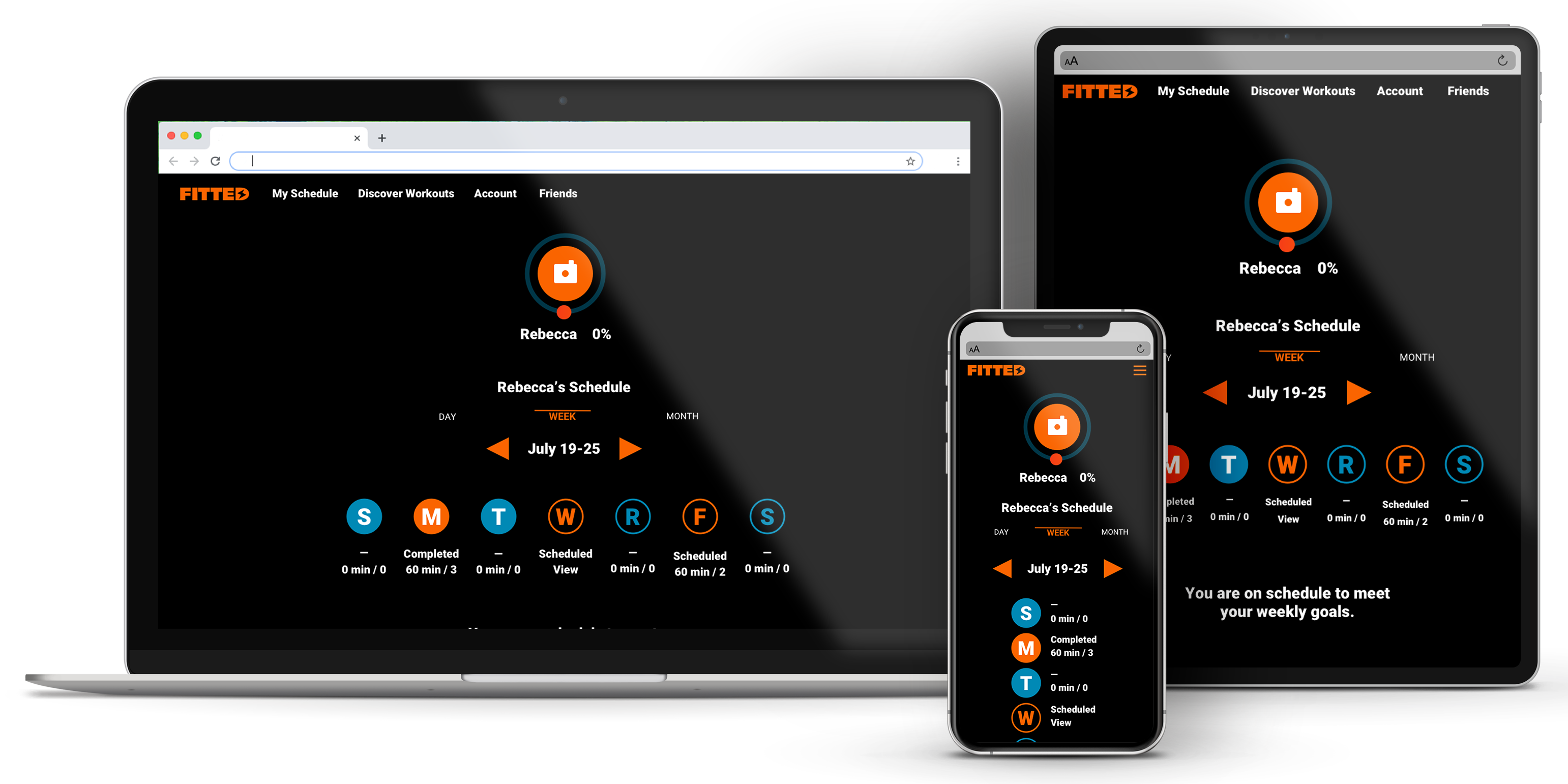
Animating the onboarding experience with Principle
07Product Lens
Principles behind the product
Pick one metric that matters
Charge replaces calorie counts and charts, so beginners see progress, not pressure.
Remove the hardest step
Scheduling was the biggest barrier, so onboarding captures goals once and the app plans the rest.
Give control without effort
“Mix It Up” lets people change the plan instantly, without planning anything themselves.
Design for change
Ratings after each workout keep tuning the schedule as goals and preferences evolve.
What I’d measure next
As a concept, Fitted wasn’t launched. These are the signals I’d use to validate it:
- Activation: share of new users who finish onboarding and start their first scheduled workout.
- Habit: share of users who keep their charge up week over week.
- Engagement with control: how often “Mix It Up” is used, and whether it reduces skipped workouts.
- Learning loop: post-workout rating rate, and whether ratings raise schedule completion.
- Social pull: friend connections per user, and retention for users with friends versus without.