
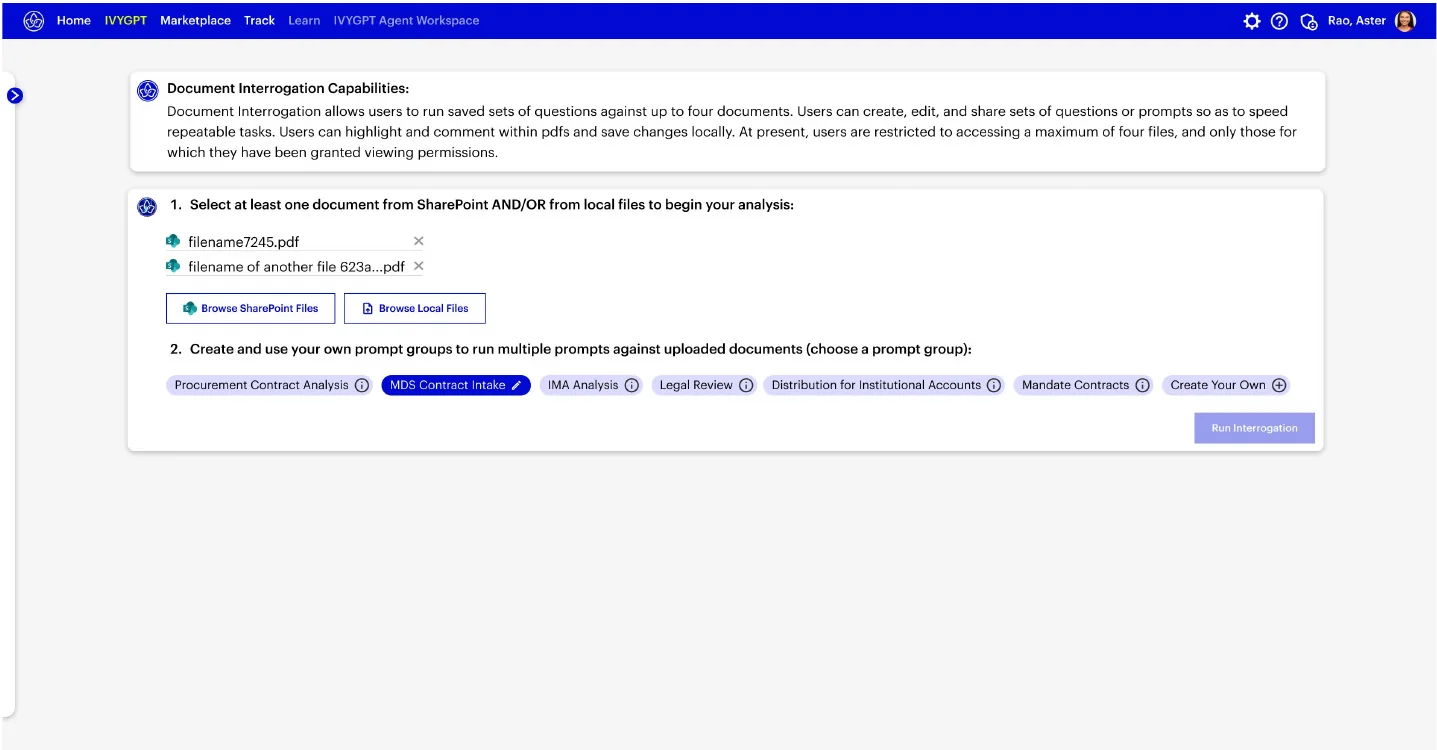
Multiple teams kept requesting small, document-focused AI tools, and the core AI team faced a growing backlog of low-value requests. I identified the pattern and proposed a scalable, modular tool that let users upload documents, build and manage their own prompt groups, and share workflows without developer support.
80%of related document use cases made self-serve for users
~90%borrowed from existing UI patterns and the design system
4development squads coordinated
3target teams validated, plus a core user group
- Role
- Lead designer and AI design thinking lead
- Scope
- All CEO-approved use case discovery, plus the core platform
- Partners
- Four development squads
- Company
- Invesco · 8,000 people · $1.5T+ AUM
01The Challenge
- Multiple teams requested small, document-focused AI tools with narrow scope.
- Each required unique development and design effort despite low reuse potential.
- The core AI team faced a growing backlog of low-value requests.
- The risk: slowed AI adoption and resources diverted from high-impact use cases.
02My Role & Responsibilities
- As lead designer and AI design thinking lead, I led all CEO-approved use case discovery and also worked on the core platform.
- Proposed a generic, modular tool to serve multiple document-related AI needs.
- Reduced dependency on the core AI team for prompt updates or interface changes.
- Coordinated across four development squads to deliver on time despite infrastructure challenges, stepping in to coordinate execution, maintain momentum and realign priorities.
03Strategy: Something Going On?
- Identified common patterns across siloed GenAI document use cases.
- Validated the broader need through cross-silo consultative sessions.
- Scoped guardrails: focus on broad applicability and self-service editing.
- Designed for autonomy, to free the core AI team for complex, high-value work.
- Leveraged existing GenAI platform pillars to minimize new build effort.
04Tactical Delivery
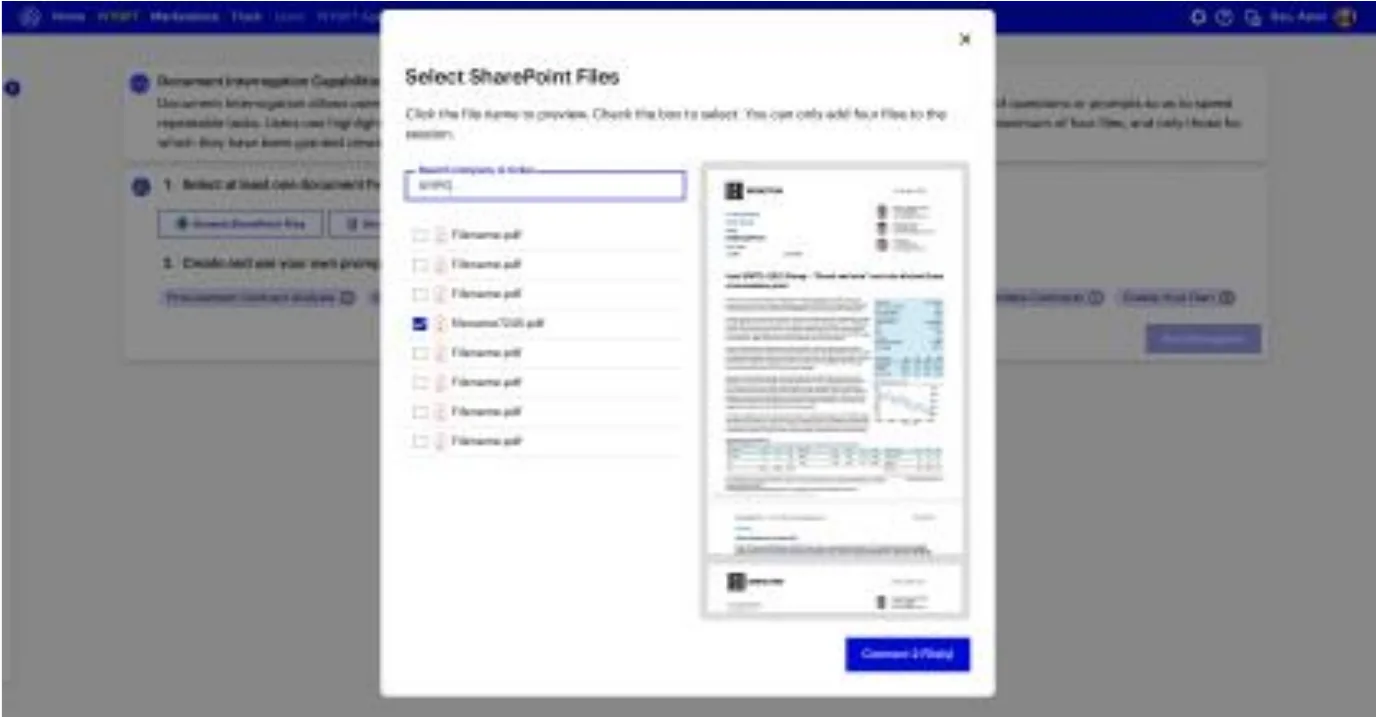
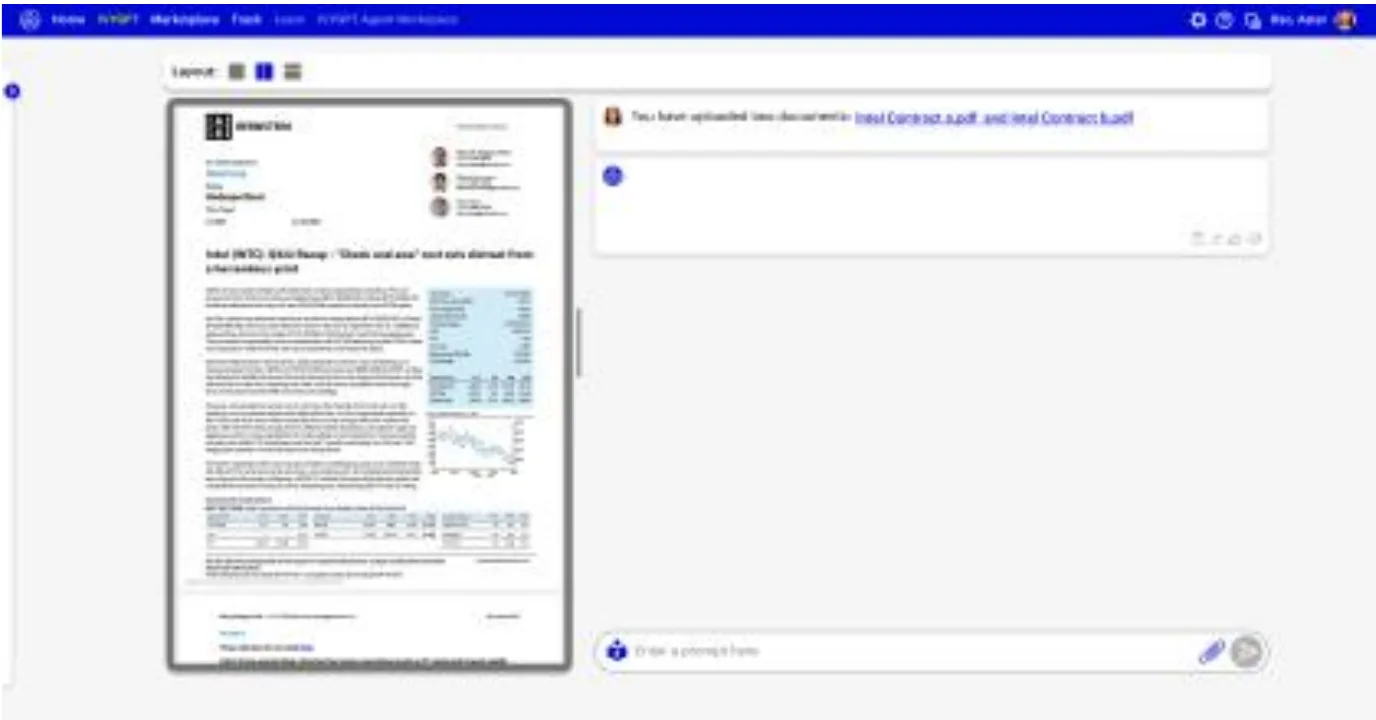
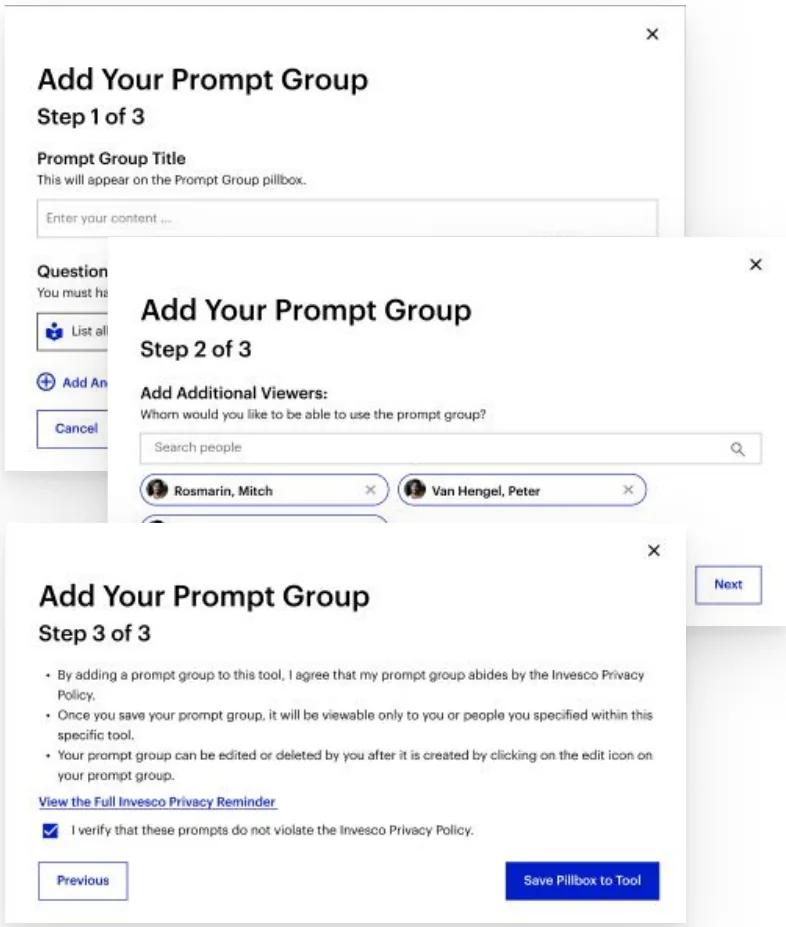
- Designed the end-to-end interface for document upload, prompt group configuration and workflow sharing.
- Borrowed almost 90% from current UI patterns and the design system.
- Scoped modular functionality to support reuse and reduce tech debt.
- Conducted iterative validation with three target teams, plus a core user testing group.
- Created guidance and documentation for a scalable handoff.
- Coordinated between four dev squads to unblock dependencies and maintain momentum.
05Results
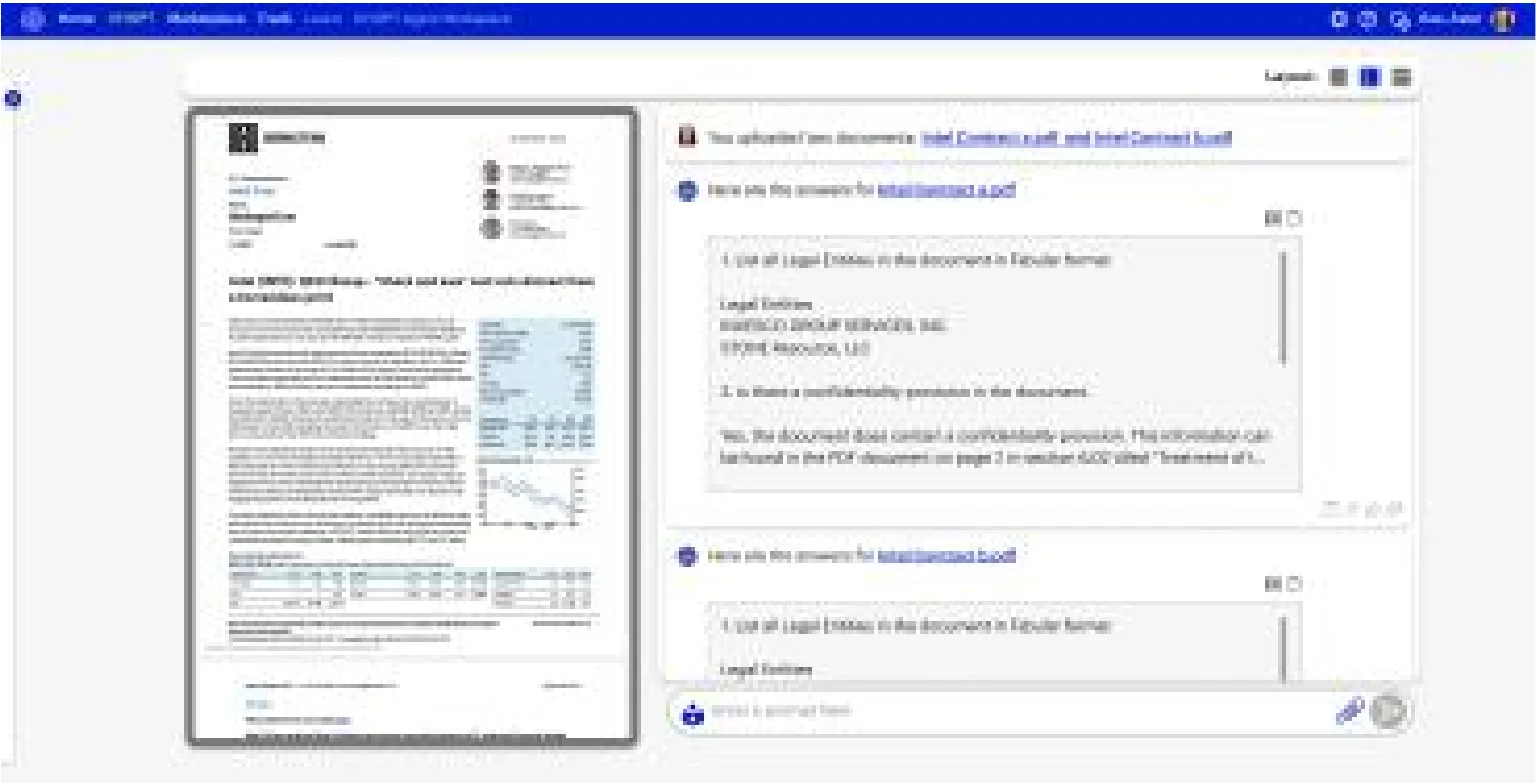
80% of related document use cases became self-serve, so users could run them without depending on the core team to implement, edit or scale tools.
- Reduced future design and development overhead through self-serve workflows.
- Became the foundation for Invesco’s internal prompt ecosystem.
- Tied the prompt library to this tool to rapidly build prompt groups.
- Users could share and manage access to prompts with teams, to ensure privacy.
- Empowered users to test and validate their own workflows, which freed the core AI team to focus on higher-value, bespoke AI solutions without slowing GenAI adoption at the firm.
- Elevated my role to include cross-squad coordination and product leadership support.
06Key Learnings
Early pattern recognition
Led to proactive, scalable design instead of one-off builds.
Embedded user autonomy
Reduced long-term dependency on AI specialists.
Cross-squad facilitation
Overcame infrastructure and prioritization challenges.